Lead Designer
GATEGORY : Digital Game, Collaborative GENRE : Narrative, Adventure, Puzzle, 3D ENGINE : Unity
USC Games MFA Thesis Project Sep 2025 - May 2026
INTRODUCTION:
A 3D third-person narrative adventure game about survival and existential anxiety. Players take on the role of a newborn in a mysterious desert world, beginning a journey of exploration and survival. To stay alive, the player must search for scarce water sources while exploring the vast desert in search of the legendary ocean. Along the way, players will gradually uncover the origins and hidden secrets of this strange world. Scattered throughout the desert are colossal cubic entities with unique behaviors and mechanisms. Players must learn how to interact with these massive structures and discover the mysteries hidden behind them.
Playthrough Video
Game Mechanics
Interaction System
A contextual interaction system allows players to interact with nearby objects.
Press E to interact with the closest interactable object.
The nearest object is highlighted visually to guide player interaction.
Players can interact with water plants, NPCs, crystal and cube entities.
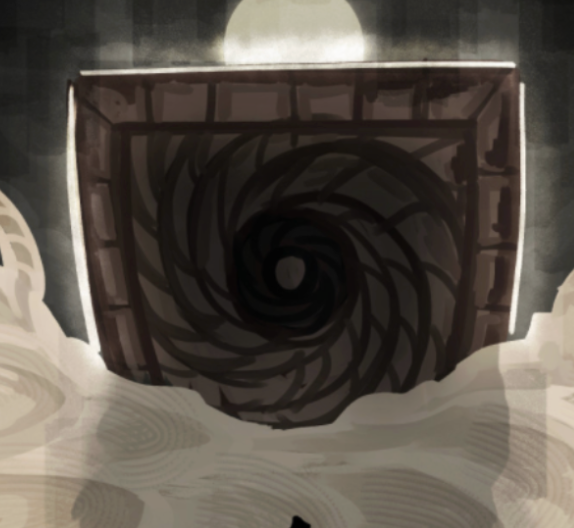
Cube Entities
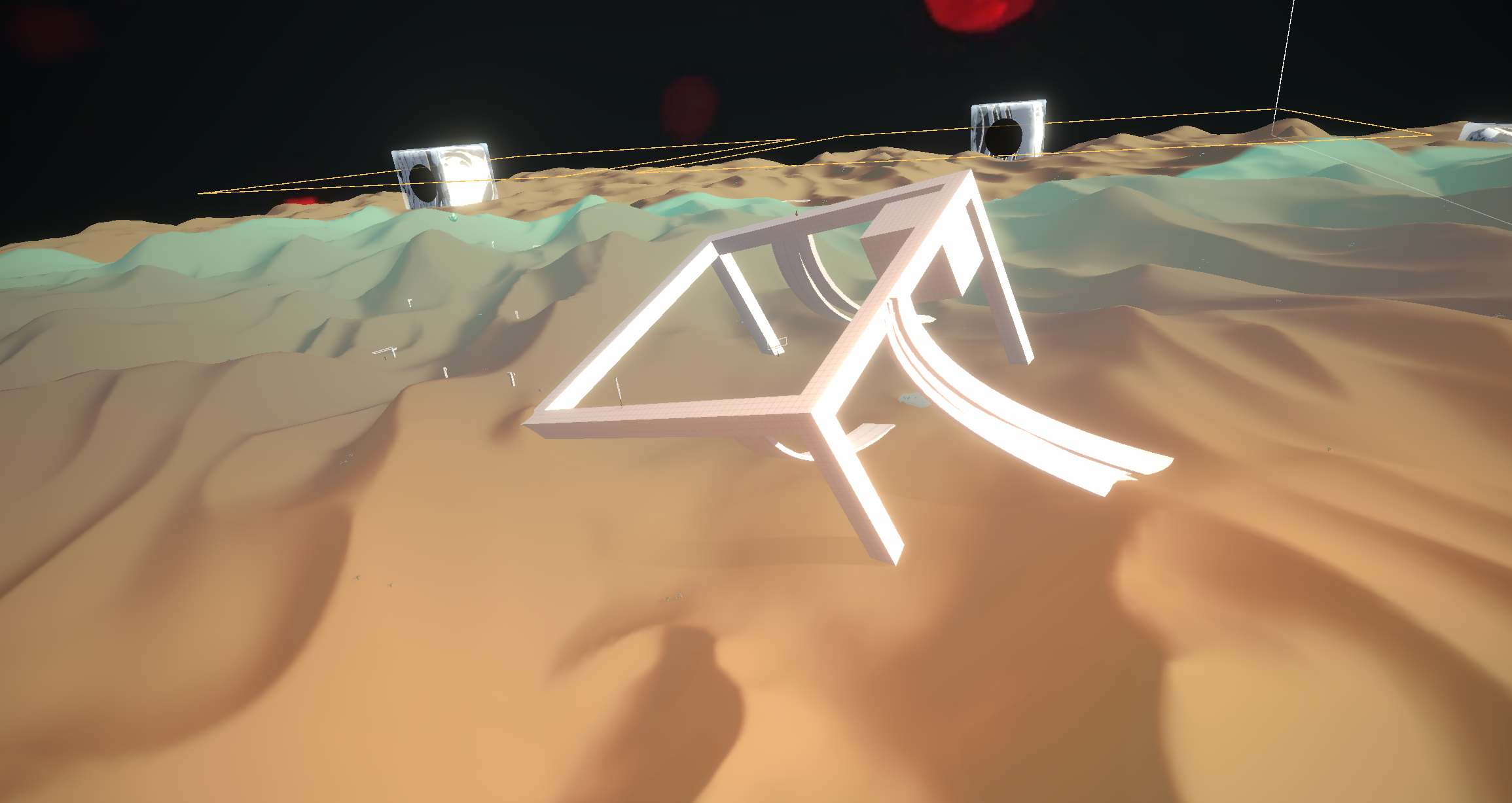
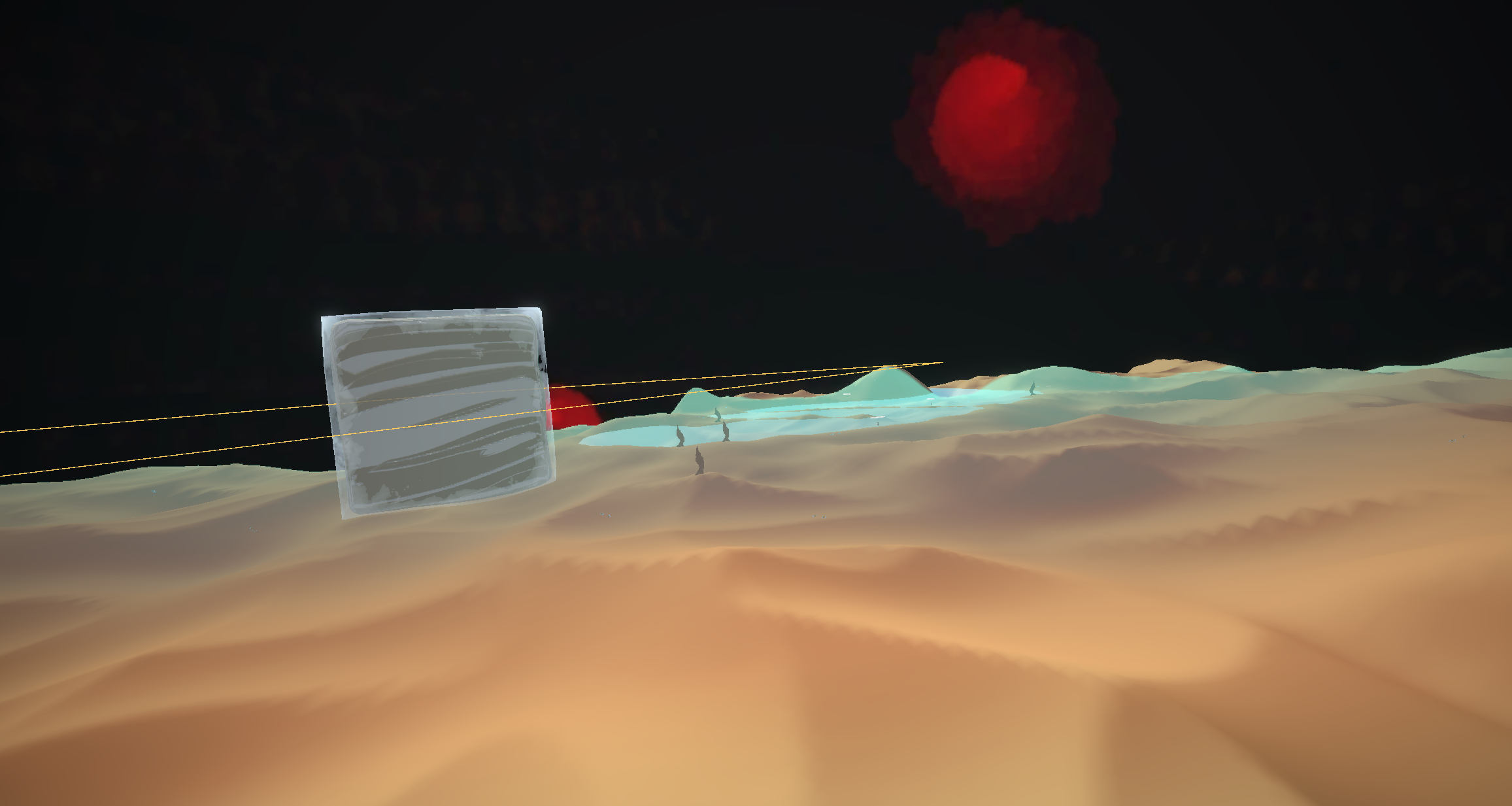
Massive mysterious cubes act as environmental entities with unique behaviors.
Some cubes move or chase the player.
Some cubes reshape terrain or influence the environment.
Cubes may grow plants or affect the ecosystem.
The same cube type may behave differently depending on the environment.
Players can interact with cubes in several ways:
Use them as moving platforms or transportation
Wait for cubes to destroy terrain obstacles
Potentially enter cubes to travel through the world.
Water Survival System
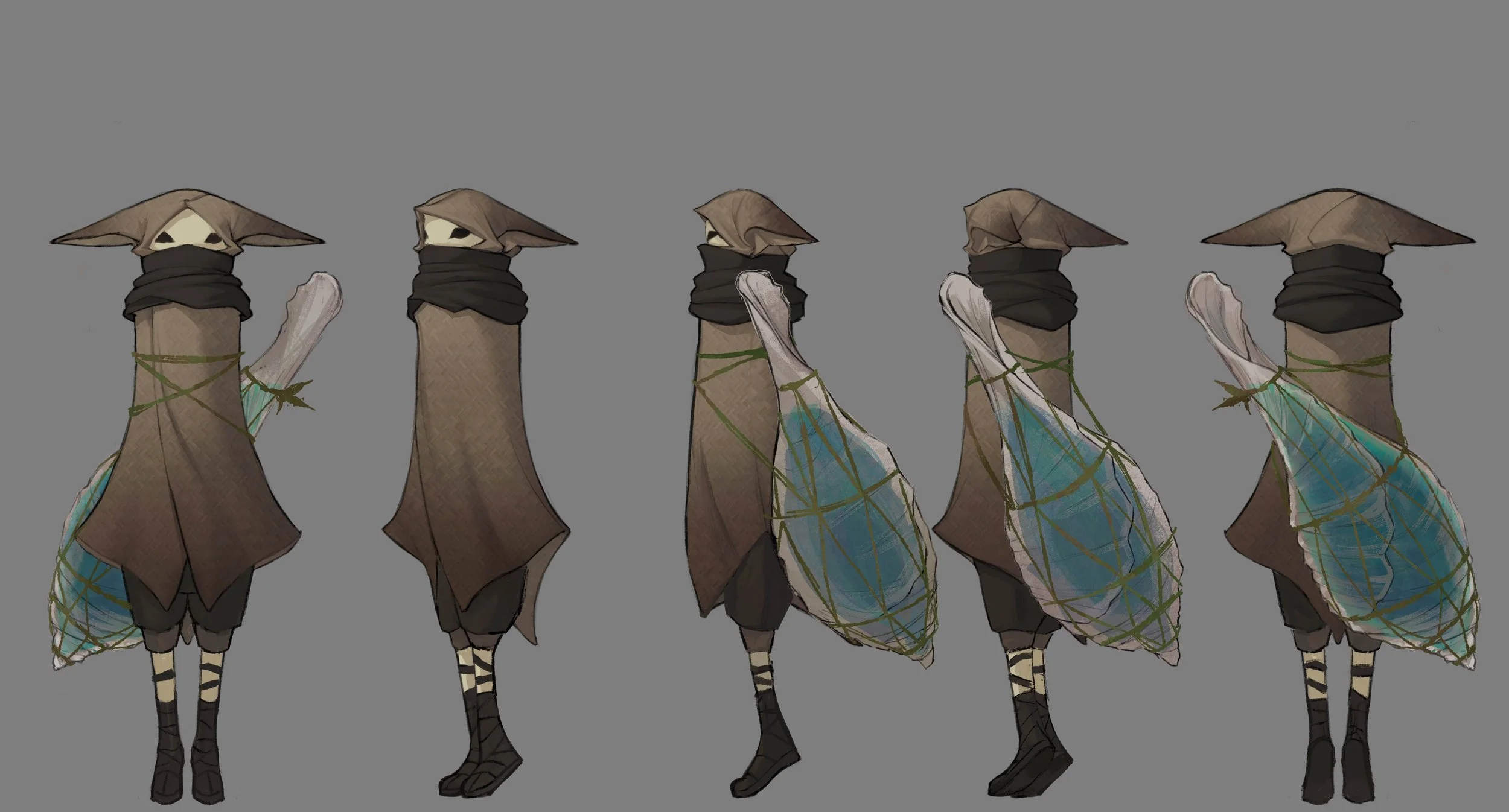
Water is the core survival resource that determines the player's lifespan and player will take a water container.
Water Container
Current Amount – Water currently stored.
Max Capacity – Maximum water storage limit.
Warning Threshold – Triggers audiovisual alerts when water is critically low.
Water Consumption
Natural depletion over time.
Increased depletion when sprinting.
Higher consumption when exposed to sunlight.
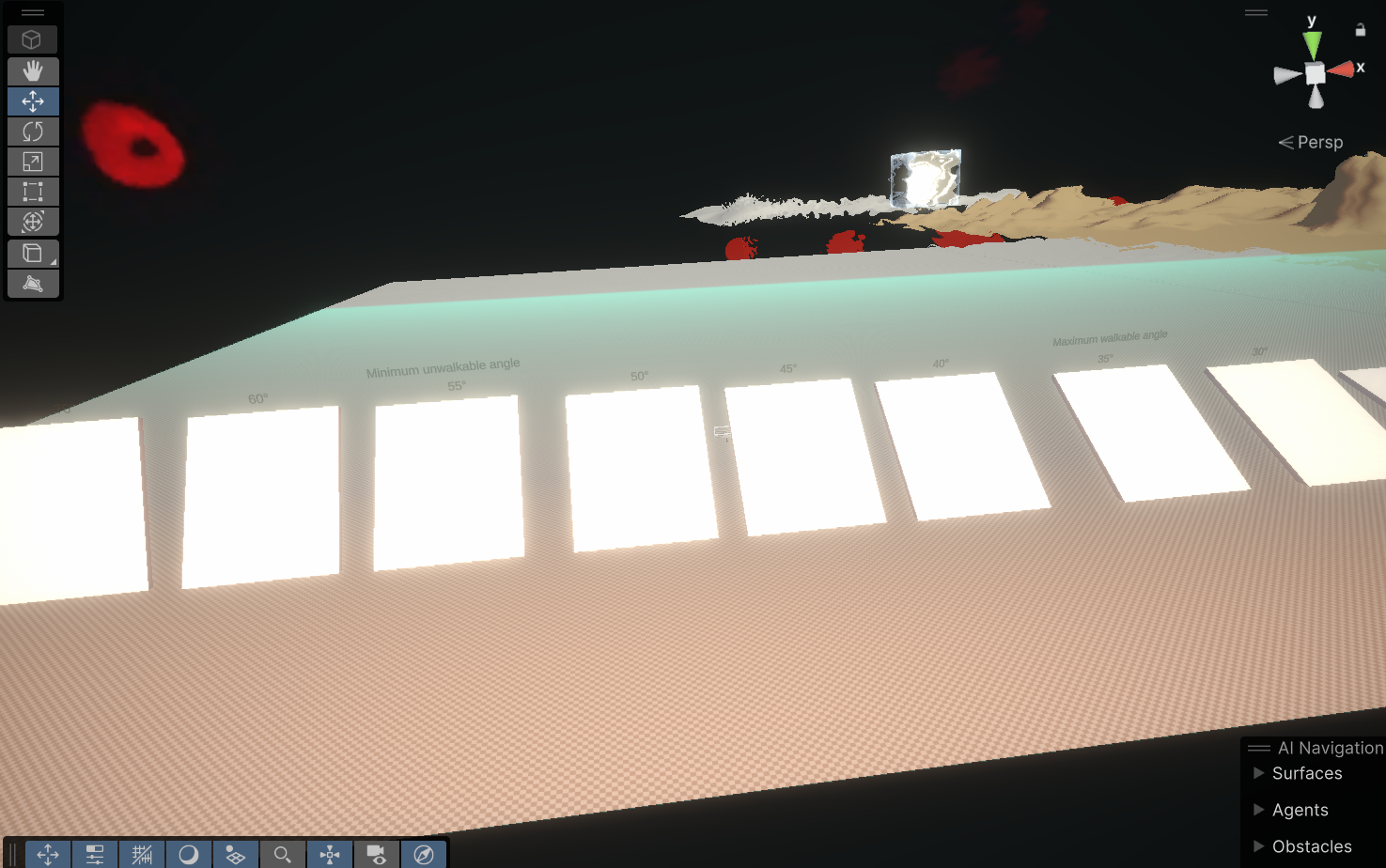
Slower movement on steep slopes increases total water usage.
Water Sources
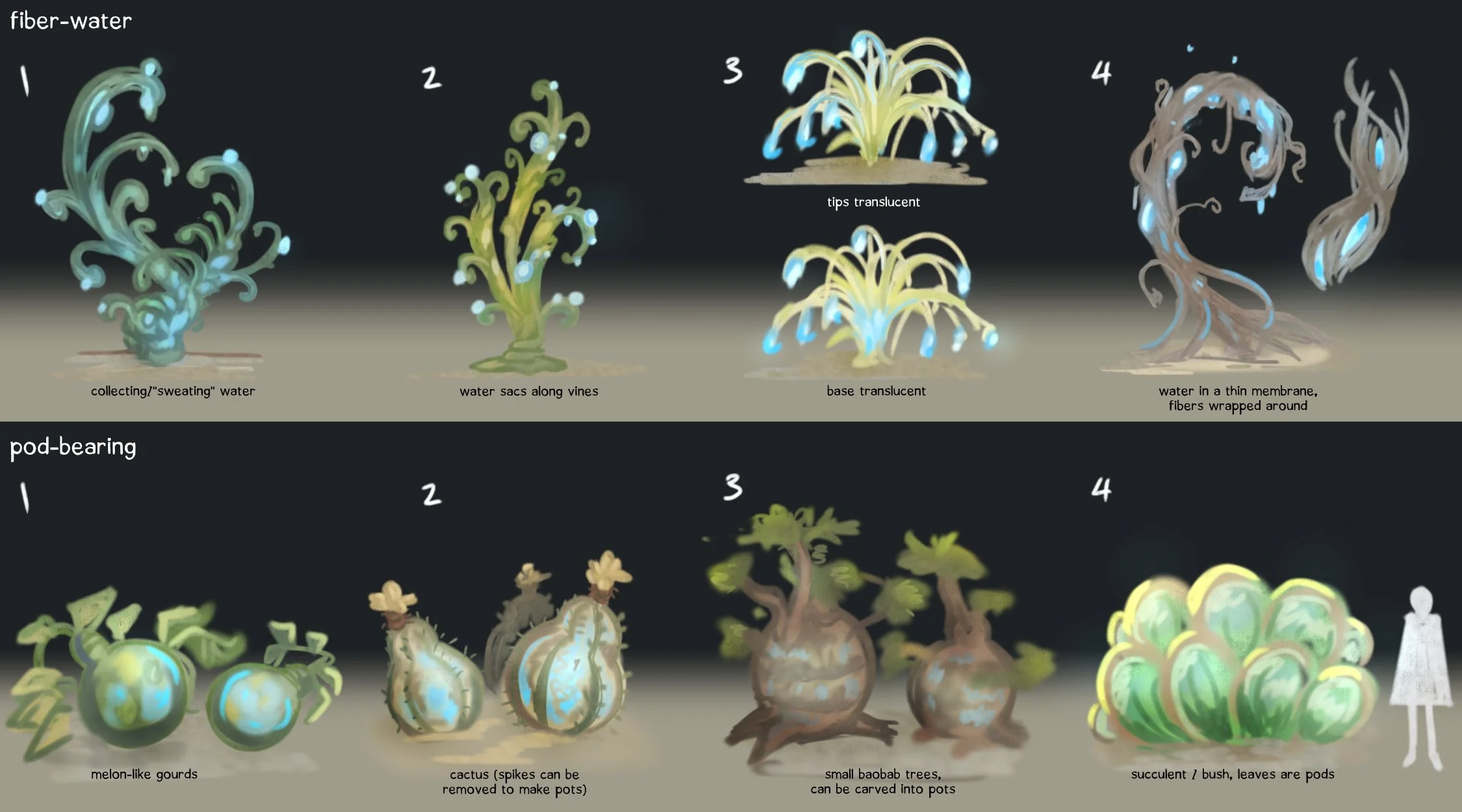
Plants / Water puddles / Dead bodies
Players must constantly search for new water sources to continue exploring.
Control
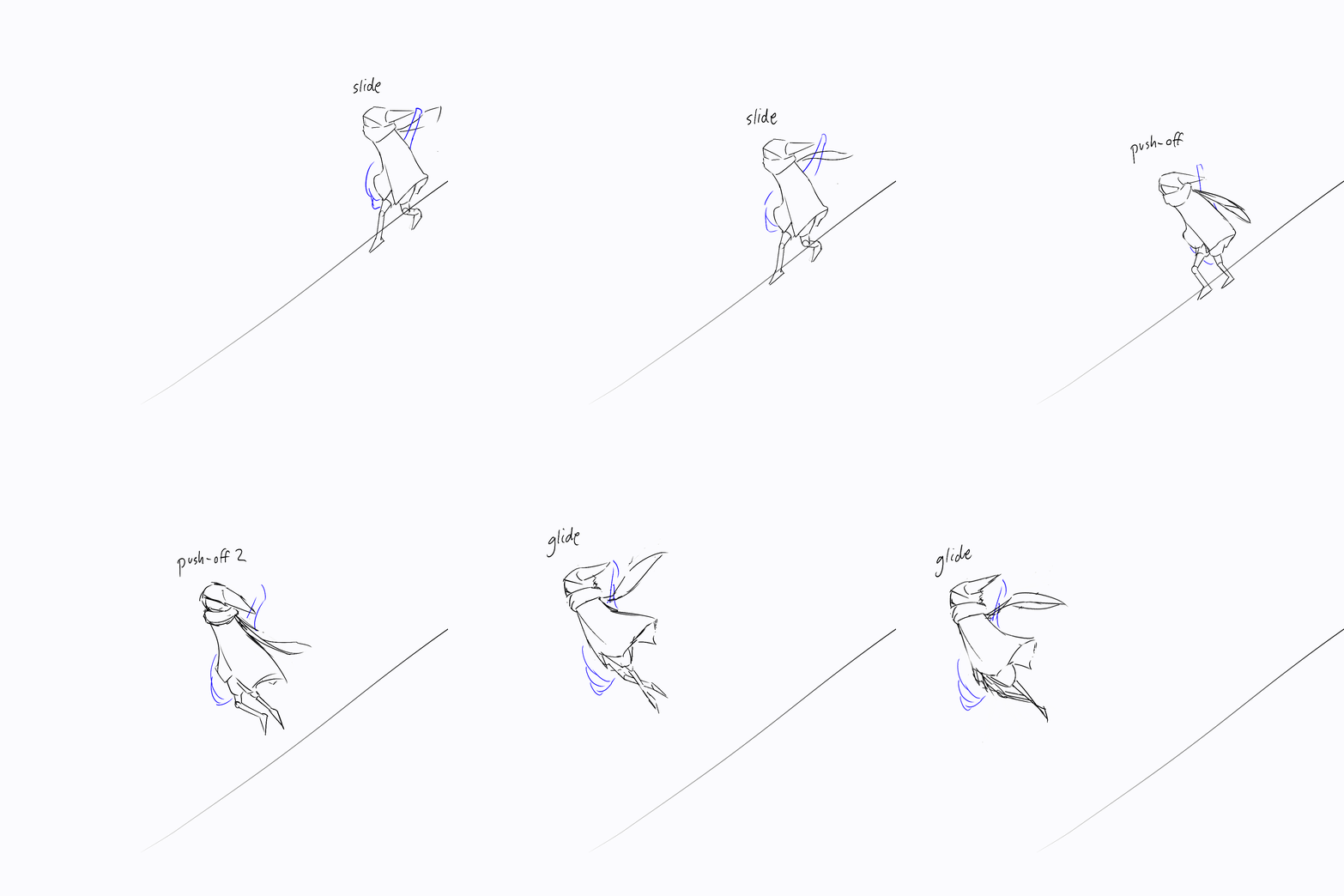
Simple and context-based input system (movement, sprint, slide, glide, interact).
Single-button interaction targets the closest object.
Movement is tied to resource management (e.g., sprint increases water consumption).
No jump design shifts focus to environmental navigation and decision-making.
Exploration and World Design
The game world is designed for non-linear exploration.
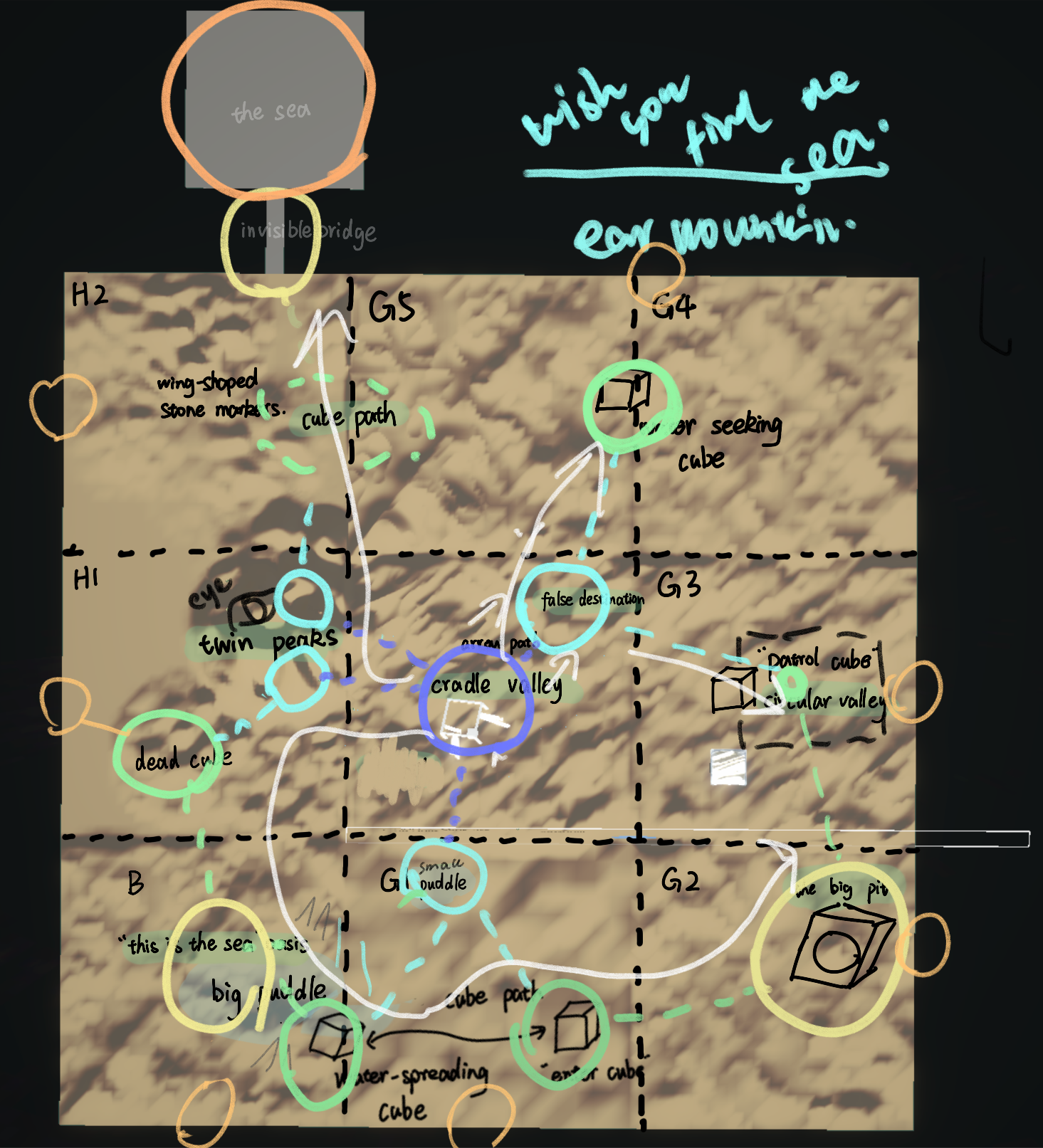
A fixed map with predefined points of interest (POIs).
Randomly generated sand dunes fill the spaces between locations.
Players are free to ignore puzzles and explore the world at their own pace.
Level design emphasizes:
Multiple solutions to puzzles
Environmental navigation
Player-driven exploration rather than linear progression.
POI Network Design
Points of Interest (POIs) function as nodes in an interconnected information network.
Each POI contains unique information about the world.
POIs often hint at or direct players toward other POIs.
This creates a chain of discovery, guiding players organically without explicit quest systems.
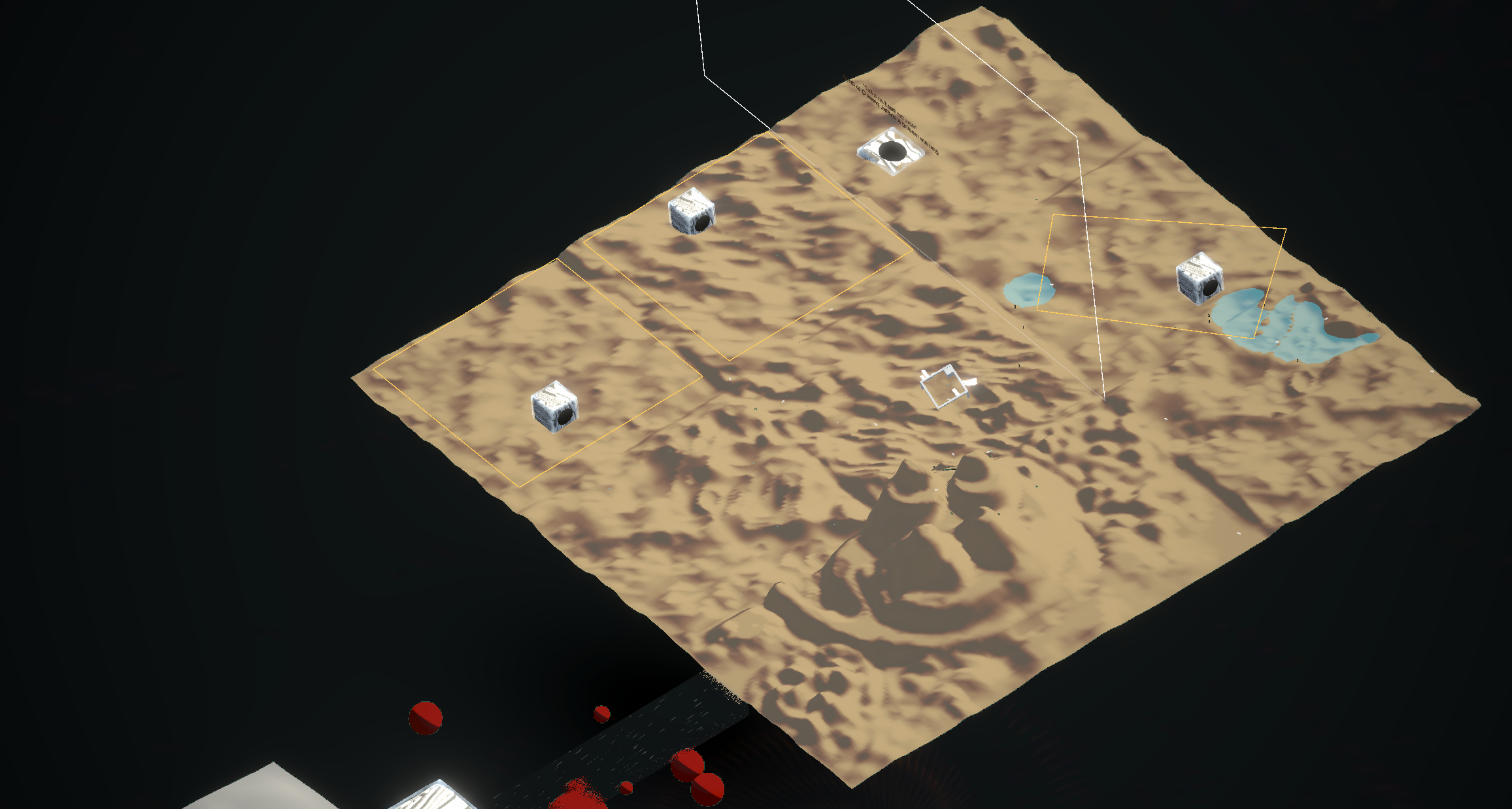
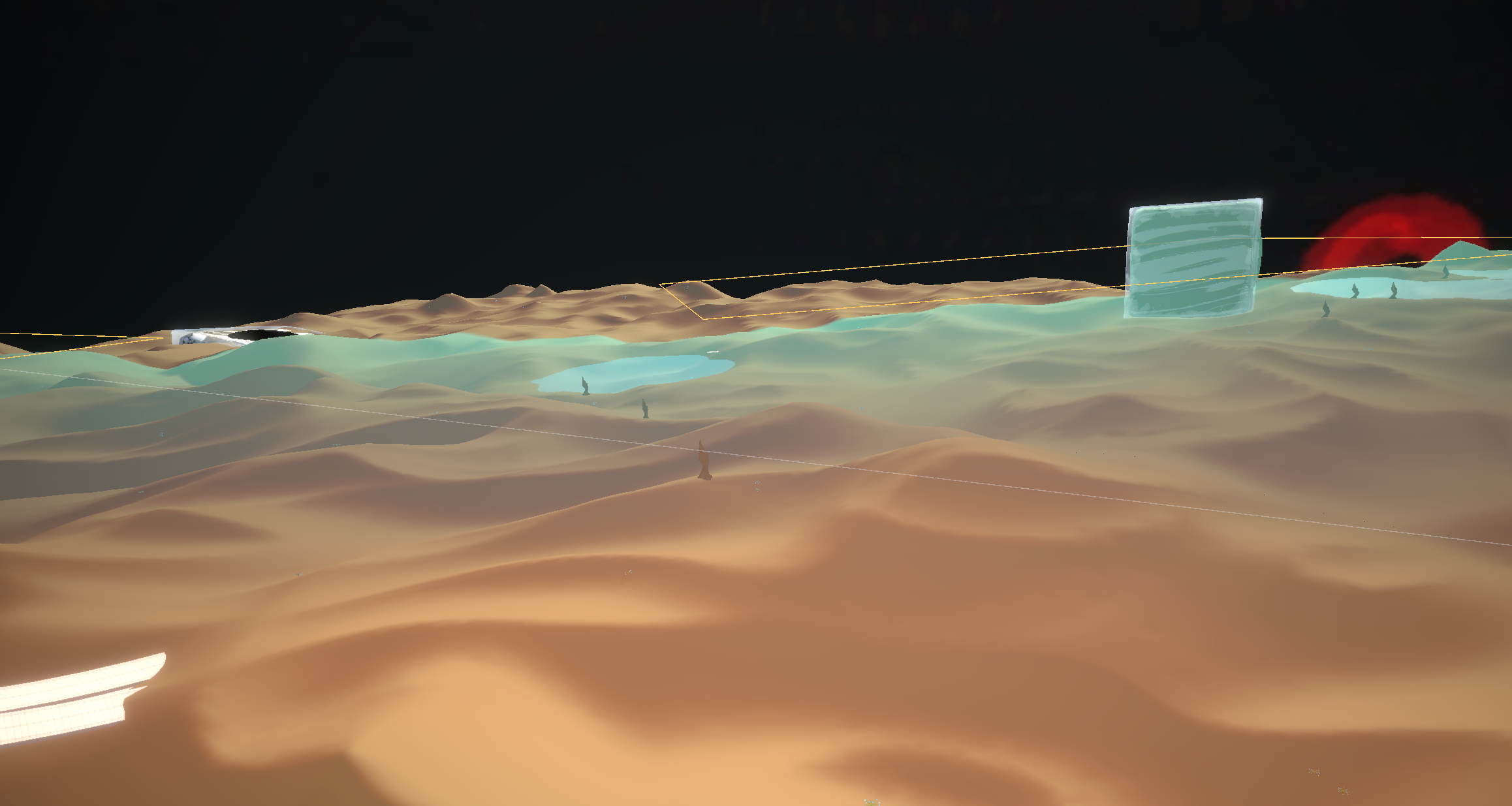
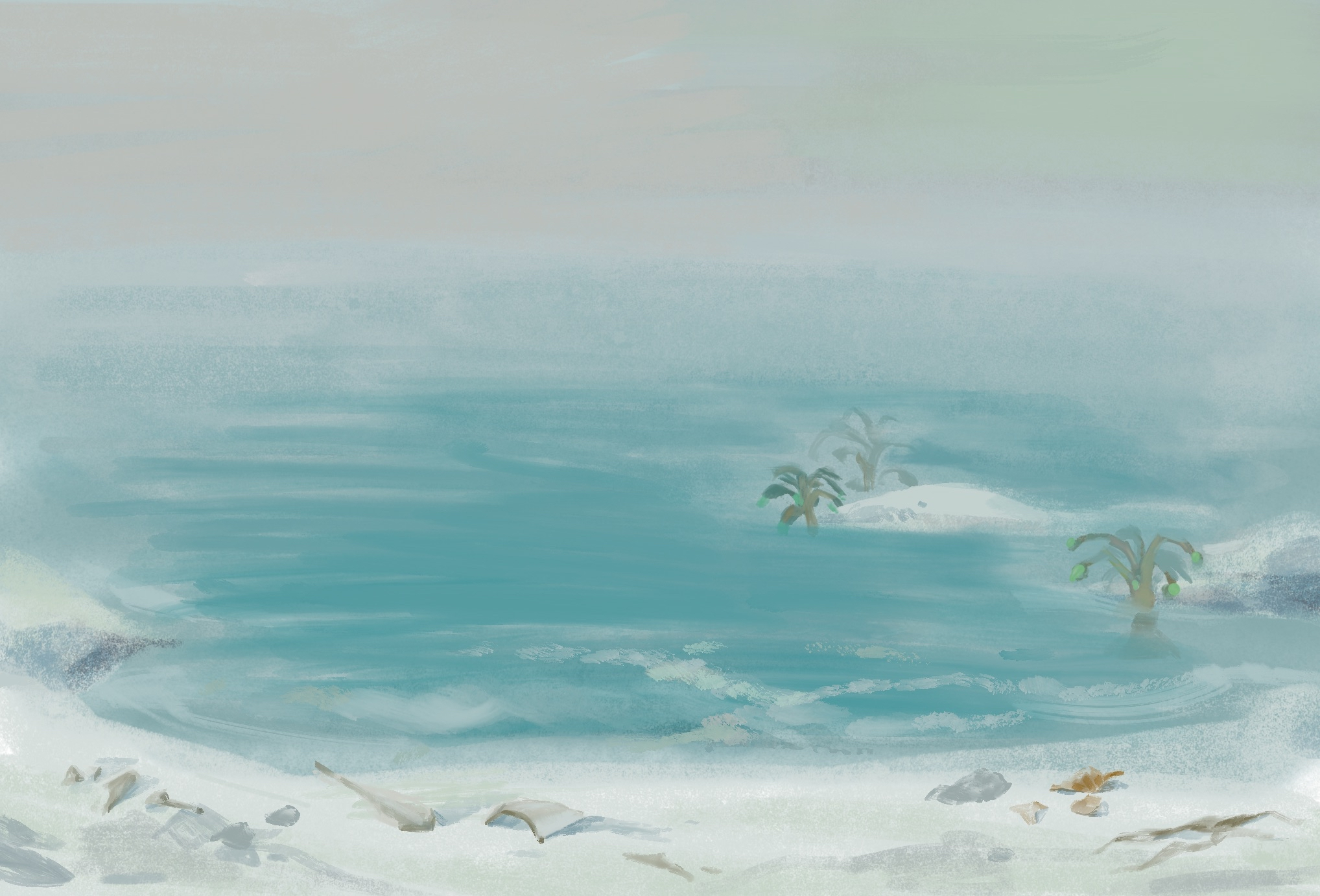
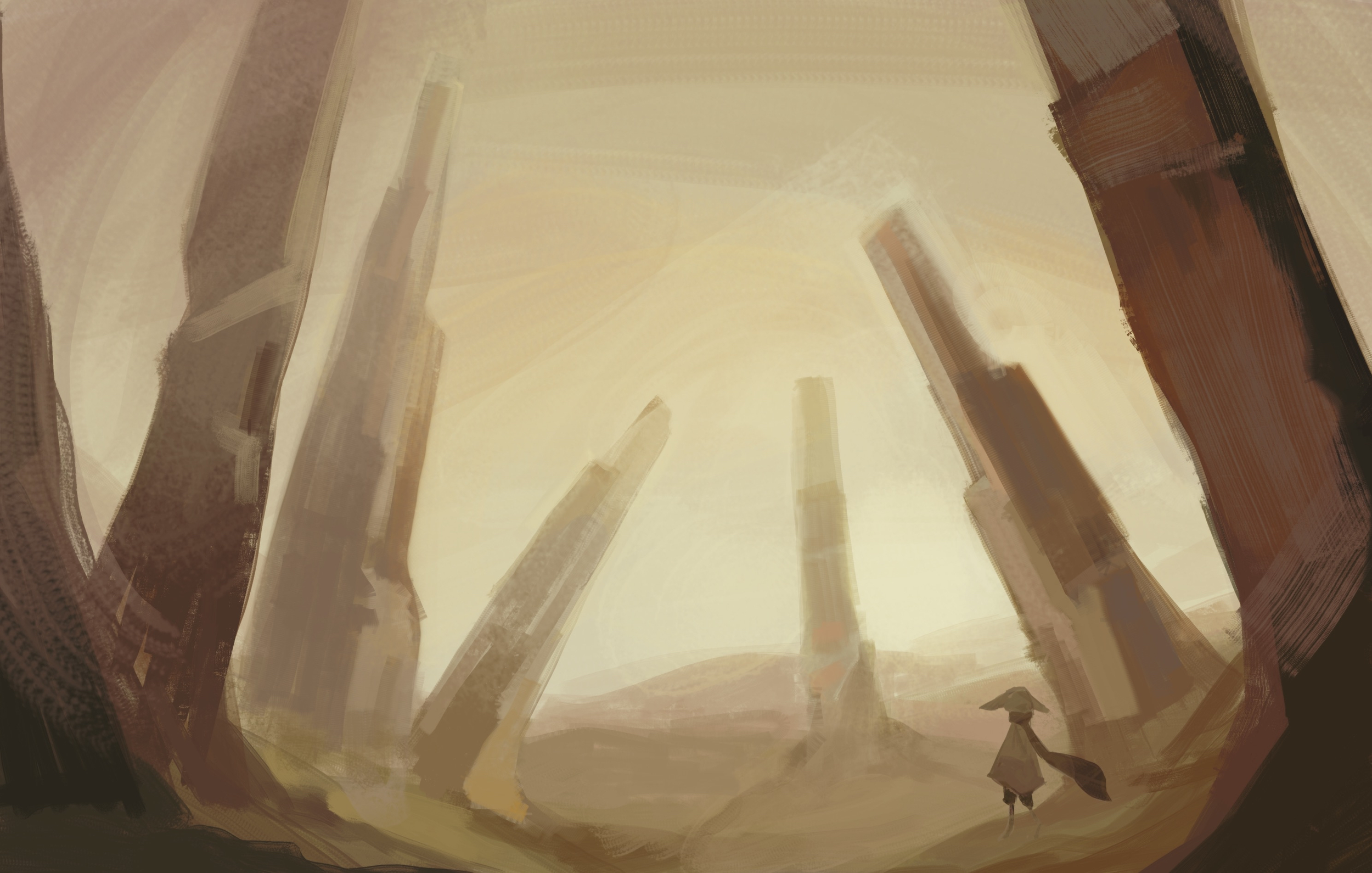
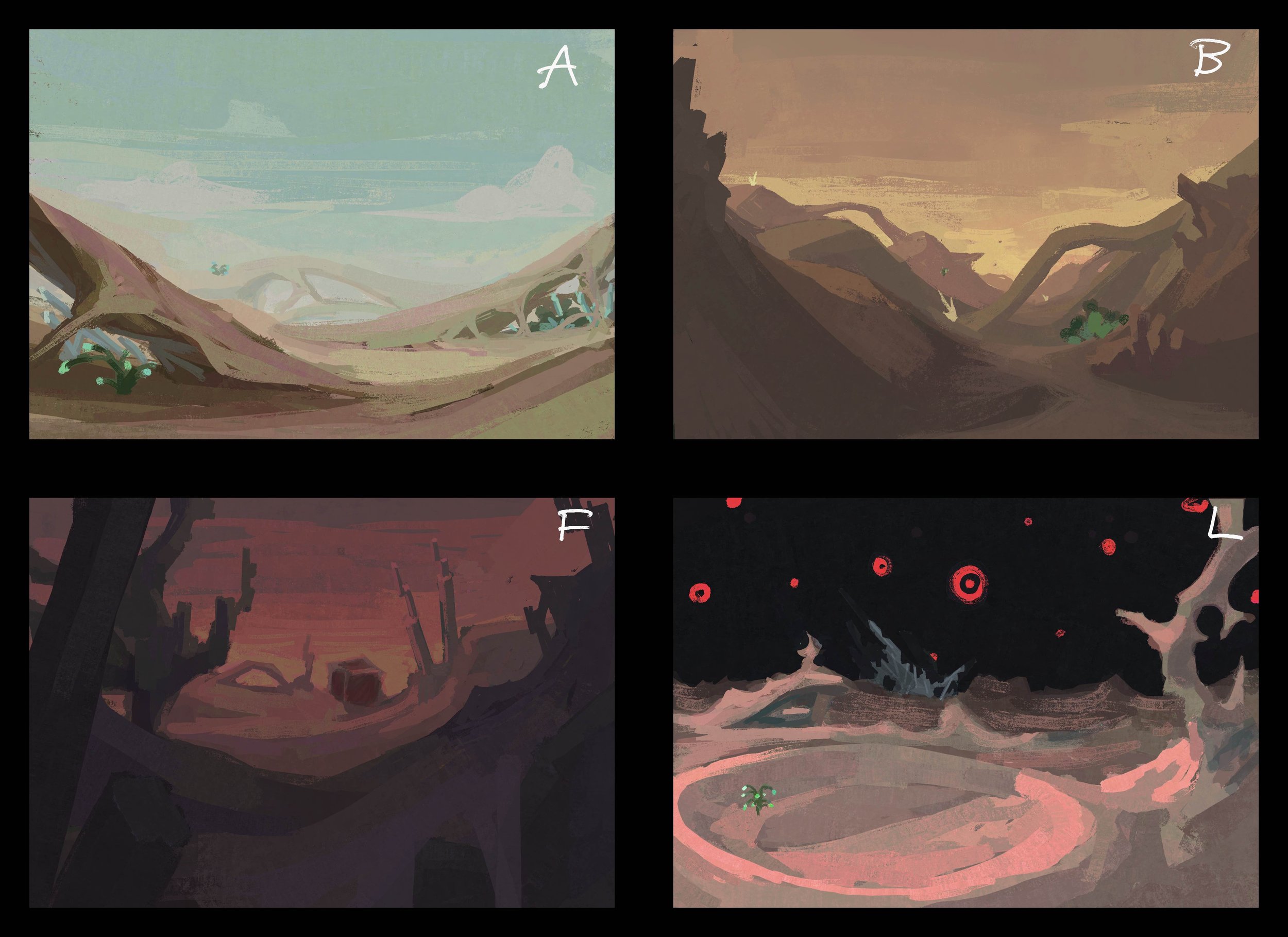
Scene Concept Art
3C
Character
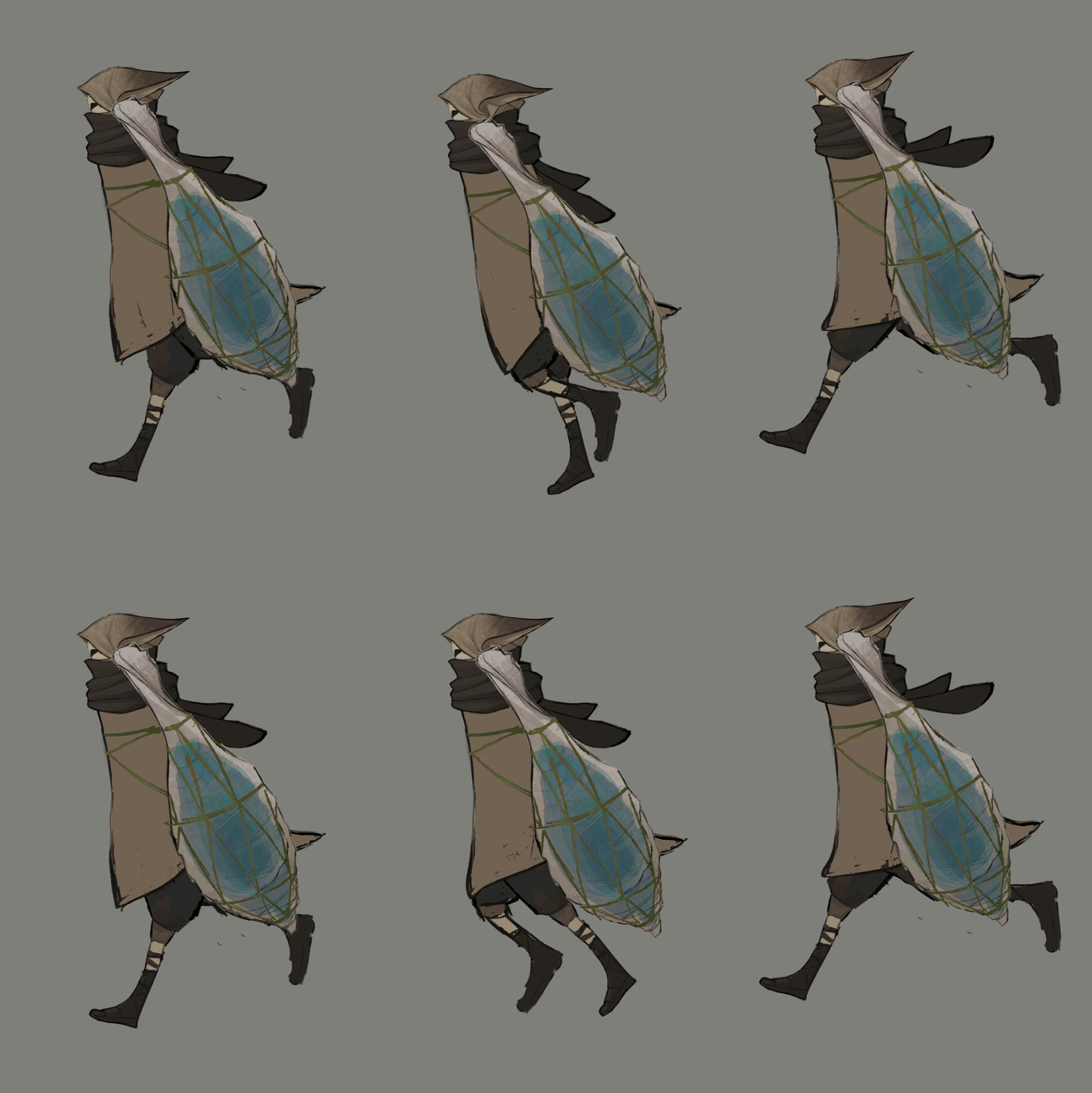
Player controls a fragile newborn whose survival depends on water management.
No jump and limited slope traversal (≥50°) encourage terrain-based navigation.
Movement includes walk, sprint, slide, and glide, forming a flow from grounded to momentum-based traversal.
High vulnerability reinforces the theme of survival and existential anxiety.
Camera
Third-person camera provides strong spatial awareness for exploration.
Designed to highlight terrain, landmarks, and distant POIs.
Nearest interactable objects are visually indicated to improve readability.
In memory mode, the camera switches to fixed-position free look.
Level Design and Information Distribution
Layered Information Structure
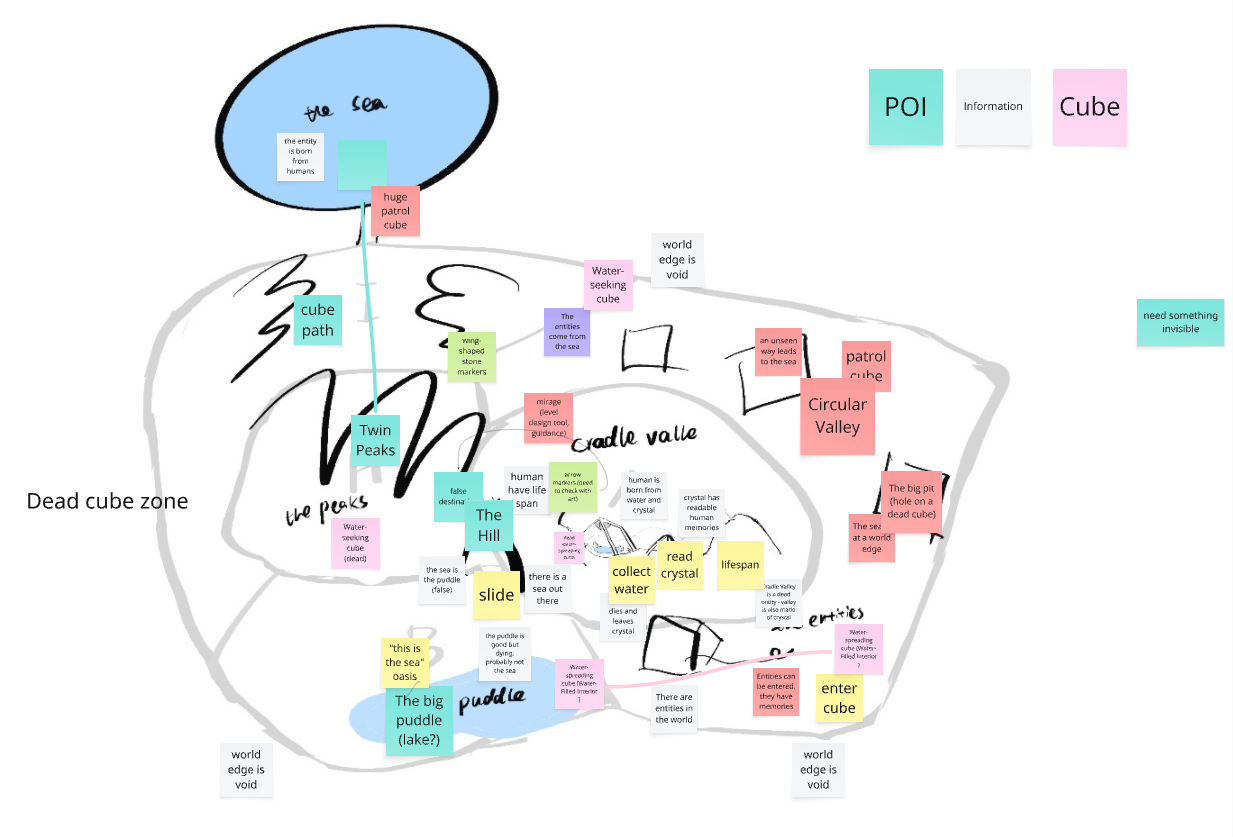
Information about the world and the location of the sea (the final goal) is distributed in multiple layers with increasing clarity and accessibility.
Lower-level information is easier to obtain but more ambiguous.
Higher-level information is more explicit but harder to access.
Players must progressively gather and connect these layers to understand the world and reach the final destination.
This structure encourages long-term exploration and gradual discovery.
Exploration-Driven Distribution
Information is spatially distributed across the world and embedded into exploration.
Key information is placed in different locations across the map.
Players are encouraged to explore actively rather than follow direct objectives.
Each discovery provides partial understanding and motivates further exploration.
Visual Guidance & Player Path
Level design subtly guides players through environmental cues.
Use of sightlines, landmarks, and terrain composition to direct attention.
Visual framing increases the likelihood of players following intended paths.
Guidance remains implicit to preserve a sense of player agency.
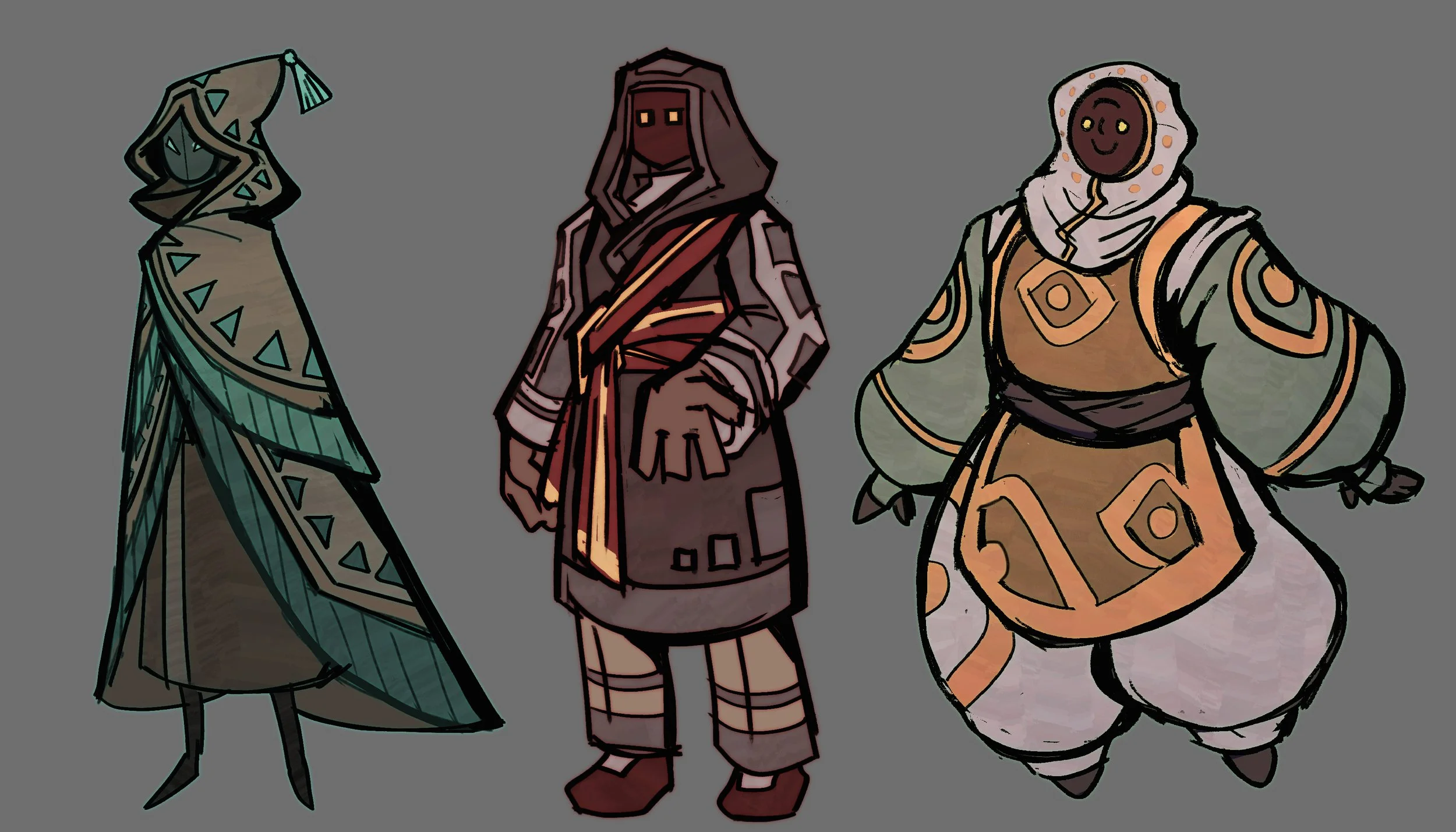
NPC System
NPCs act as environmental storytellers and social interaction points.
NPC behaviors include:
Standing and engaging in dialogue
Performing independent actions that players can observe
Being followed by the player voluntarily
NPCs also contribute to worldbuilding through dialogue and behavioral storytelling.